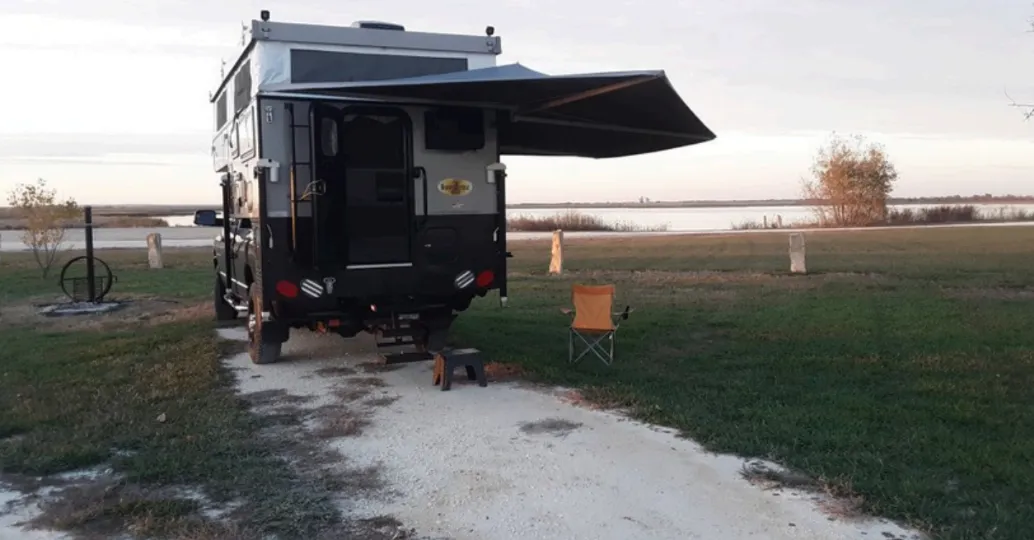
Smokey Hills of Kansas
On Nov 6, I wandered west (for me) to the Smoky Hills of Kansas. Yes, there are hills in Kansas; in
fact, geographically, there are several distinct areas with a wide variety of terrain and wide-open
spaces.
The 11 different regions are:
Arkansas River Lowlands
High Plains
Chautauqua Hills
Osage Cuestas
Cherokee Lowlands
Ozark Plateau
Flint Hills Red Hills
Glaciated Region
Smoky Hills
Wellington/McPherson Lowlands
My destination was the Glen Elder Wildlife Area in the North Central region, on the doorstep of the
High Plains. After an absence of 10 years chasing the elusive Pheasant, I decided to wander west
and try my luck. In reality, my main reason was to test out our new-to-us Bundutec camper. The
weather forecast was typical of Kansas for November: Little chance of rain, lots of wind, and some
cold nights. I arrived two days before the opening and set up camp on the edge of Glen Elder
Reservoir, a 12,500-acre lake with 13,500 acres of public hunting, birding, hiking, and lots of history.
This was the Solomon River valley before the dam was built, and a favorite hunting area of the
Pawnee, Osage, and Kaw tribes. The area had a well-known Hot spring called "Waconda".
Unfortunately, when the lake was impounded, the Hot spring is now underwater. This is also known
as "Post Rock" country. With the scarcity of trees, the early settlers used limestone rocks and
fashioned them into "Posts" for fencing.
The forecast called for 19 degrees with NW winds 30-35 and gusts to 45 on Sunday night, so I was
looking forward to testing the Truma combi eco and the insulation of the Bunducamp. The
campground was on the south edge of the lake, with nothing to stop the wind. On certain Kansas
wildlife areas, primitive camping is permitted for 7 days free of charge. This location even had a
very nice pit toilet stocked with fresh paper for the Pheasant opener. I faced the truck into the wind
and set up camp. The next 3 days had strong NW winds forecast, which actually helped with
pheasant hunting. It is hard to get close to a pheasant without a dog if the wind is calm. On Sunday,
you could feel the cold front move in. I installed the thermal blanket / radiant barrier on the inside,
covered a couple of small vents (battery) with tape to keep the wind out, and settled in for a chilly
night. With the thermostat set to 68, I made dinner (Jambalaya) and listened to the wind symphony
begin. I was a little concerned about gusty winds on the pop-up, but it rode them out unscathed. I
should have put the camper jacks down, but the rocking helped me fall asleep. Of course, earplugs
were mandatory as the wind buffeted the vinyl fabric.
I woke up several times through the night to check the Truma combi and temps. The Truma
performed flawlessly, keeping the camper nice and toasty. I was expecting it to run constantly, but
the camper has good insulation, and the radiant barrier did its job. The trauma would cycle on and
off for 10-20 min, then kick back on. I left the fan on Eco while sleeping. In the morning, I set the
fan speed to high, and the heat was wonderful. The solar setup is 2: 100-watt rigid Jackery panels, a
200 AH mini Renogy LifeP04 with a heated compartment. I did not need to heat the battery
compartment since I was not charging at night, but to prepare for even colder events during
charging, I ran one duct from the Truma to the battery compartment, which is mid-point on the
camper with outside access. I do plan on installing a temp probe in the battery compartment to
monitor in the future.
Overall, my assessment of Bunudtec's performance was impressive. Since I already had the camper
winterized, I carried portable 5-gal water containers, which I brought inside the camper. I found a
water bottle left in the truck overnight, frozen solid, but the camper was maintained at 68 all night.
As for the Thetford cassette, I used some windshield washer fluid to keep it from freezing. Not only
did the camper work as advertised, but I was also able to walk several miles for 3 days. I met some new
hunting acquaintances from Kentucky, Tennessee, and Arkansas, and enjoyed the Smoky Hills of
Kansas. Oh, and yes, we have to find a new Pheasant recipe to try out.
Additional Adventure Photos


